
A Month-by-Month Guide to the Alaskan Brown Bear Seasonal Cycle
Alaska’s seasons are a tapestry of dramatic shifts, with some of the most dramatic shifts in temperature throughout the world. Understanding the brown bear seasonal cycle gives you the best opportunity to see these fascinating creatures up close and personal. It's essential for planning the best time to see bears in Alaska and maximizing your adventure during the prime bear viewing seasons in Alaska.
From their emergence in spring to the frenetic feeding of fish in the summer and the final autumn push before hibernation, brown bears follow predictable patterns. This guide explains where and when to witness them in the wild.
Spring Awakening (Late April – May)
Winter can provide a tight grip on wildlife in Alaska, and this is when brown bears awaken from their dens. The enormous animals are lean, hungry, and ready to hunt. It’s the beginning of the annual brown bear seasonal cycle. Most brown bears like to leave their dens in late April or early May, but that timeframe varies with snowpack and temperature fluctuations. You can think of this period as a time of transition, where bears are on the move, grazing lush grasses and along rivers and meadows.
For wildlife enthusiasts, this part of the year is a quieter start to bear viewing seasons in Alaska. While there are good sightings to be had, this is not typically the peak of the best time to see bears in Alaska because the animals are still widely scattered and focused on low-calorie foods needed for recovery after winter.
Early Summer: Salmon Begin to Return (Early June-July)
Alaska’s rivers and streams start to flow with life by early summer. The first salmon runs (especially of sockeye) bring a dramatic shift in the brown bear seasonal cycle. Brown bears have a natural instinct to know where the fish will appear, and they are often seen congregating along streams and estuaries. Bears use fish to rapidly build strength and fat reserves. During this part of the season, you’ll see younger bears learning to fish and mothers teaching their cubs. Dominant males searching for the best fishing spots are a common sight.
Is it the best time to see brown bears in Alaska? Not quite, but you can still see plenty of activity as the summer starts to get in full swing ahead. Fat Bear Lodge operates June through September, making this one of the times you’ll see an abundance of wildlife and opportunity for great views.
Mid To Late Summer: Peak Salmon and Prime Views (Mid-July – Early September)
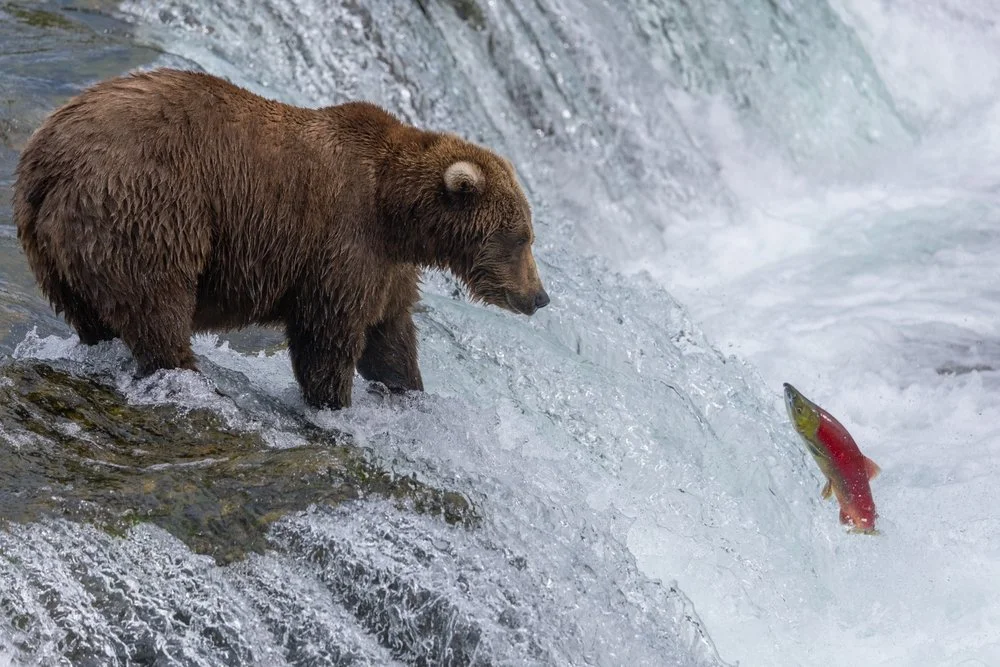
Most visitors will get the best experience at a remote Alaskan lodge during this time of the year. It’s widely considered the peak of the brown bear seasonal cycle. This is when salmon runs are at their strongest, with fish leaping over waterfalls and coursing upstream in huge numbers. We sit on the banks of the world-famous Naknek River at the doorstep of Katmai National Park’s Brooks Falls, a well-known location that attracts hundreds of brown bears.
The time period is when brown bears have an intense focus on feeding. The abundant salmon provide the calories needed for growth and for preparing storage for the coming winter. Imagine seeing a bear catch a fish mid-leap or the raw power of a large male staking his territory. Without a doubt, this is the best time to see bears in Alaska, offering unparalleled opportunities for photography and unforgettable bear viewing seasons in Alaska.
Autumn: Final Feast Before Winter (September – October)
Hyperphagia refers to the critical phase of the brown bear cycle where bears have an intense desire to consume food. With a natural instinct, they have a period of nonstop eating to accumulate the necessary fat reserves. The brown bear seasonal cycle enters its last visible stage: bears eat voraciously, often doubling down on any available high-calorie foods. Remote lodges don't operate after September because of the logistical challenges. More specifically, there are fewer bears visible, they are more scattered, and weather conditions become harsh and unpredictable.
Winter: Rest and Renewal (November – April)
Winter marks the final phase of the brown bear seasonal cycle, where bears retreat into their dens to hibernate. During these months, sightings are rare and usually only occur in the warmest regions or under unusual circumstances. For most visitors, winter is a time to plan the next adventure rather than expect bear encounters in the wild.
Ready To See Brown Bears Up Close And Personal?
Nestled on the banks of the Naknek River near Katmai National Park, Fat Bear Lodge offers front-row access to some of the best bear viewing and wildlife experiences in the entire world. You can do all of this while enjoying expert-led tours, enthralling fishing trips, kayaking, hiking, and much more.
Book your Fat Bear Lodge adventure today and immerse yourself in Alaska’s wild beauty. You'll return with memories that last a lifetime.